
The Snellen Eyesight Chart is one of the most recognized tools in eye care, used worldwide to measure visual acuity. Whether you are visiting an optometrist for the first time or getting your routine eye exam, understanding the chart can help you appreciate how your vision is assessed and why regular testing is important
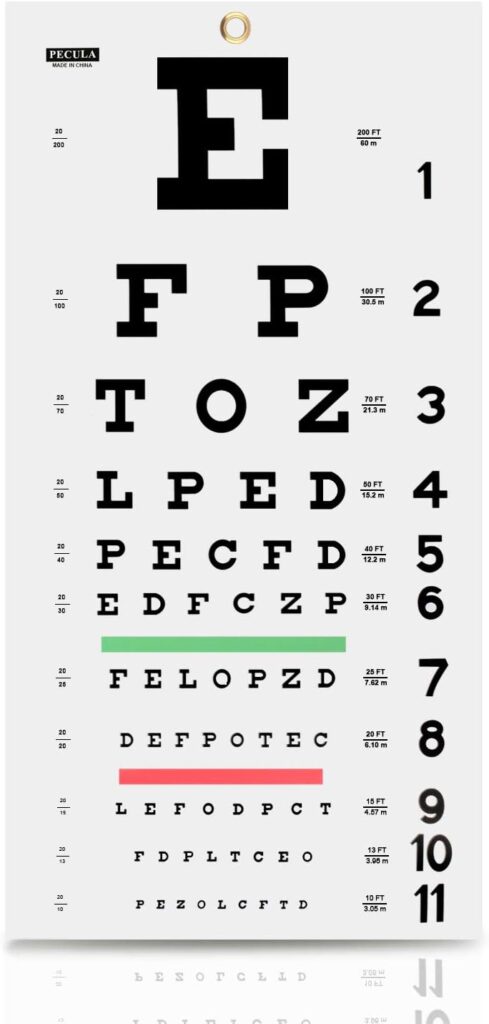
What is a Snellen Eyesight Chart?
The Snellen Eyesight Chart is a chart used to measure how well a person can see at various distances. It consists of letters arranged in rows of decreasing size. During an eye exam, patients are asked to read the letters from a standard distance, usually 20 feet (6 meters). The results provide a numerical representation of visual acuity, commonly written as a fraction, such as 20/20 or 20/40. Visual acuity is essential for daily activities such as reading, driving, and working on computers. The chart helps eye care professionals determine if corrective lenses or further treatment are needed
History of the Snellen Eyesight Chart
The Snellen Eyesight Chart was developed in 1862 by Dutch ophthalmologist Herman Snellen. Snellen designed the chart to provide a standardized way to measure visual acuity, which was previously inconsistent and unreliable. His design introduced the idea of using letters that decrease in size systematically, allowing eye care professionals to measure vision accurately and efficiently. Since its creation, the chart has become a universal tool in eye care clinics, schools, and hospitals. Modern versions have also adapted for use with symbols for children and individuals who cannot read
How the Snellen Eyesight Chart Works
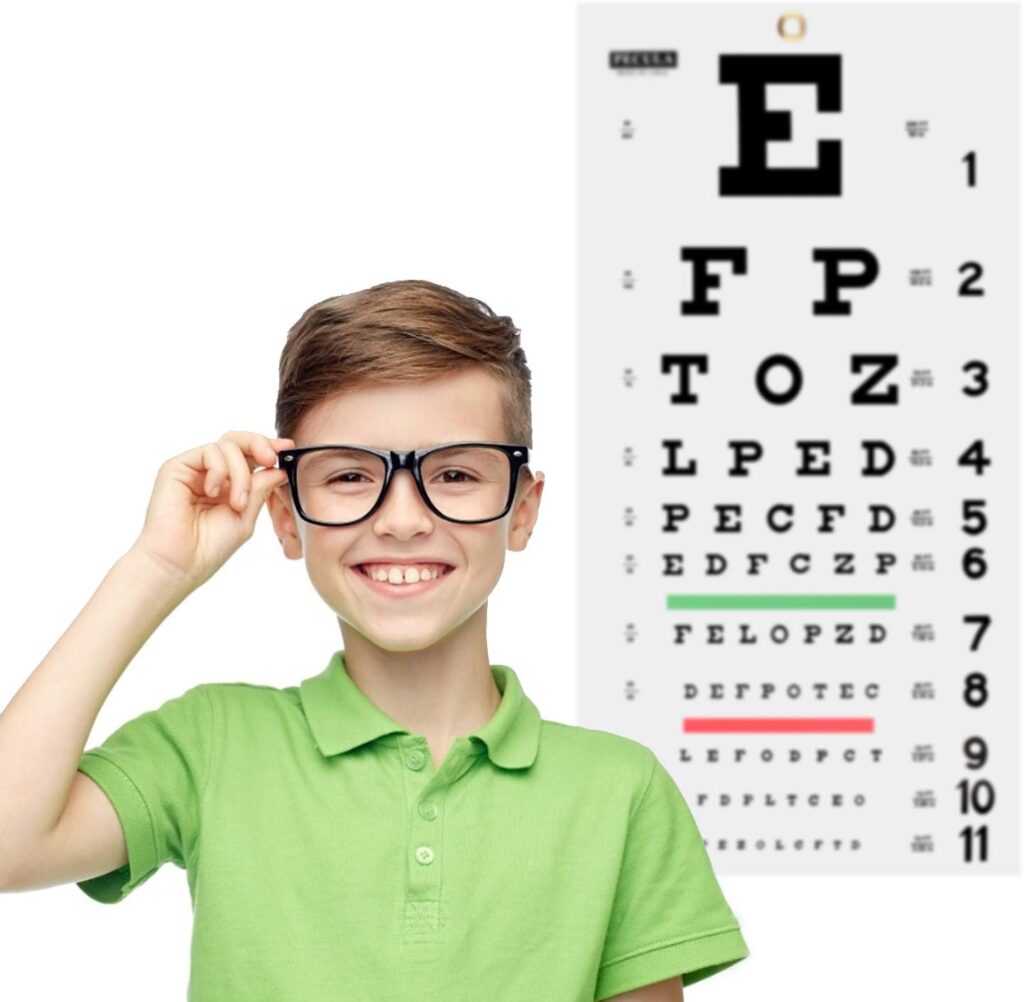
The Snellen Eyesight Chart works on a simple principle: the smaller the letters you can accurately read, the better your visual acuity. Here’s how it works step by step:
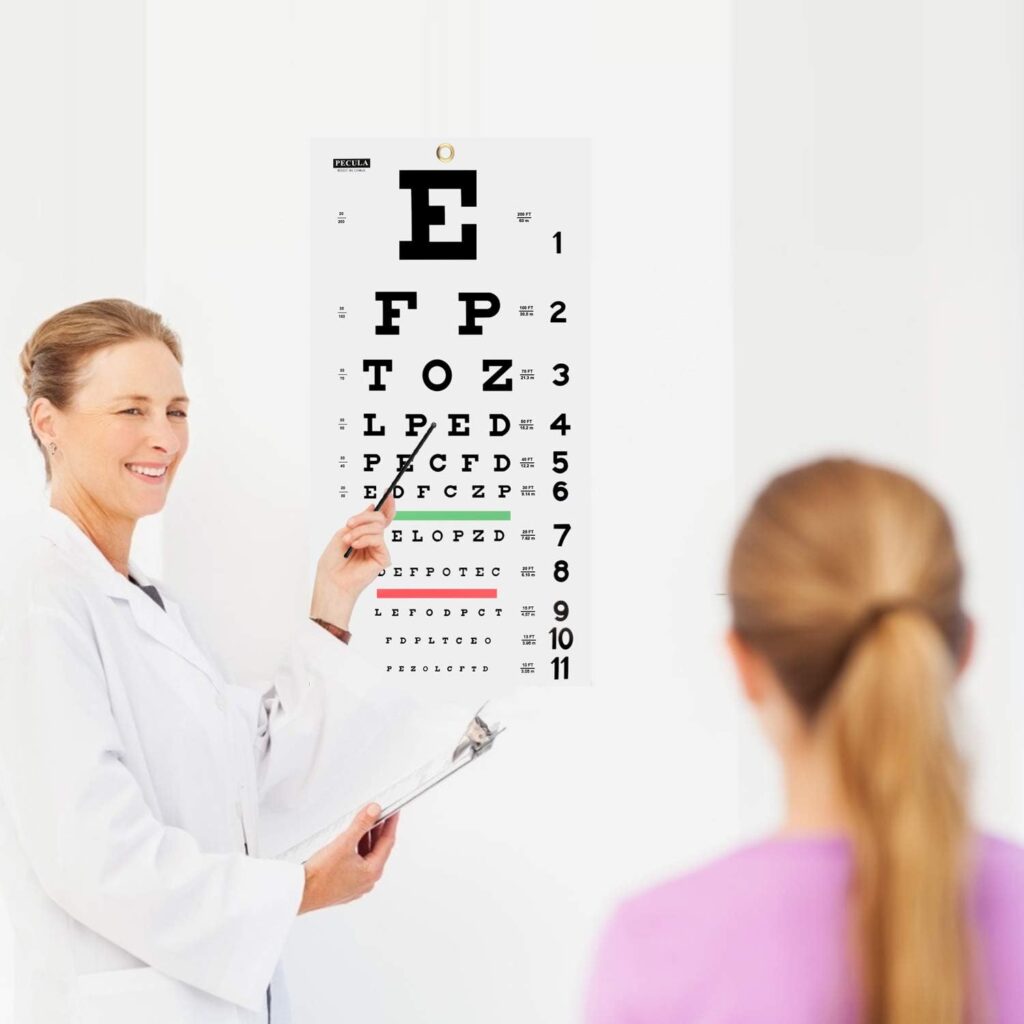
- Positioning: The chart is placed at a standard distance of 20 feet (6 meters). If the space is smaller, mirrors can simulate this distance.
- Covering One Eye: The patient covers one eye and reads the letters aloud from top to bottom.
- Recording Results: The smallest row of letters that the patient can read accurately determines their visual acuity.
- Repeating with the Other Eye: The process is repeated for the second eye to assess each eye individually.
The result is given as a fraction, like 20/20. The first number represents the distance from the chart, and the second number indicates the distance at which a person with normal vision can read the same letters.
Understanding Snellen Visual Acuity
Visual acuity is often expressed using the results of the Snellen Eyesight Chart. Here’s what the numbers mean:
- 20/20 vision: Normal vision; you can see clearly at 20 feet what an average person can see at 20 feet.
- 20/40 vision: Slightly worse than average; you must be 20 feet away to see what a person with normal vision can see at 40 feet.
- 20/200 vision: Legally blind in many countries; even at 20 feet, vision is equivalent to what a person with normal vision can see at 200 feet.
Understanding these numbers helps in determining whether corrective lenses, surgery, or other treatments are needed to improve eye health

Different Versions of the Snellen Eyesight Chart
While the classic chart uses letters, there are variations to accommodate different populations:
- Tumbling E Chart: Used for children or non-readers; patients indicate the direction the “E” points.
- Landolt C Chart: Uses a ring with a gap; the patient identifies the direction of the gap.
- Symbol Charts: For very young children or individuals who cannot read letters, symbols such as animals or shapes are used.
These adaptations ensure that the chart is accessible to everyone, regardless of age or literacy level
Importance of the Snellen Eyesight Chart
The Snellen Eyesight Chart is more than just letters on a wall. Its importance includes:
- Early Detection of Vision Problems: Identifies refractive errors like myopia, hyperopia, and astigmatism.
- Monitoring Eye Health: Helps track changes in vision over time.
- Guiding Corrective Lenses: Determines prescription strength for glasses or contact lenses.
- Legal and Safety Requirements: Used in licensing for driving and some professions to ensure adequate vision.
Regular eye exams using the Snellen Eyesight Chart are critical for maintaining good eye health and preventing long-term vision problems.
Limitations of the Snellen Eyesight Chart
While the Snellen Eyesight Chart is widely used, it does have limitations:
- Does Not Assess Peripheral Vision: Only measures central visual acuity.
- Lighting Sensitivity: Test results can vary with poor lighting conditions.
- Cultural or Literacy Bias: Letter charts may not work for everyone, necessitating symbol charts.
- Does Not Detect All Eye Diseases: Conditions like glaucoma or macular degeneration may not affect visual acuity initially.
Despite these limitations, it remains an essential tool in routine eye exams and vision assessment
How to Prepare for a Snellen Eyesight Test
Preparing for a test using the Snellen Eyesight Chart is straightforward:
- Bring your current prescription glasses or contact lenses.
- Avoid eye strain before the test; rest your eyes if needed.
- Inform the optometrist of any vision problems or discomfort.
- Ensure good lighting for accurate results.
These steps help ensure that the Snellen Eyesight Chart gives a reliable measurement of your visual acuity.

Modern Technology and the Snellen Eyesight Chart
Although traditional charts remain popular, technology has enhanced eye exams:
- Digital Snellen Charts: Interactive screens display letters or symbols.
- Automated Vision Testing Devices: Provide quick, precise visual acuity readings.
- Tele-optometry Applications: Enable remote vision screening using digital versions of the chart.
Technology ensures that the Snellen Eyesight Chart continues to be relevant in modern optometry
The Snellen Eyesight Chart is a simple yet powerful tool that has stood the test of time. From its historical origins to modern adaptations, it plays a vital role in assessing vision and maintaining eye health. Regular testing using this chart can detect vision problems early, guide corrective treatments, and ensure optimal visual performance in daily life. By understanding the Snellen Eyesight Chart, you can take an active role in your eye care, ensuring your vision remains sharp and healthy for years to come
What is the purpose of the Snellen Eyesight Chart?
The Snellen Eyesight Chart measures visual acuity, helping detect vision problems like nearsightedness, farsightedness, and astigmatism. It is essential for routine eye exams and monitoring changes in eyesight over time.
How often should I take a Snellen Eyesight Chart test?
Adults should have their vision tested at least every 1–2 years, while children and seniors may need more frequent exams. The Snellen Eyesight Chart helps track vision changes and ensures timely corrective measures.
Can the Snellen Eyesight Chart detect all eye problems?
No, the Snellen Eyesight Chart mainly measures central visual acuity. It cannot detect peripheral vision loss, eye diseases like glaucoma, or early stages of macular degeneration. Comprehensive eye exams are necessary for complete eye health evaluation
Is the Snellen Eyesight Chart suitable for children?
Yes, children can use variations such as the Tumbling E Chart or symbol charts, which replace letters with simple shapes or pictures to measure visual acuity accurately.
What do the numbers on a Snellen Eyesight Chart mean?
The fraction, like 20/20, represents visual clarity. The first number is the testing distance (20 feet), and the second number is the distance at which a person with normal vision can read the same line. 20/20 is normal vision, while higher second numbers indicate reduced clarity